|
Defining Elements of Human Trafficking: Key Elements:
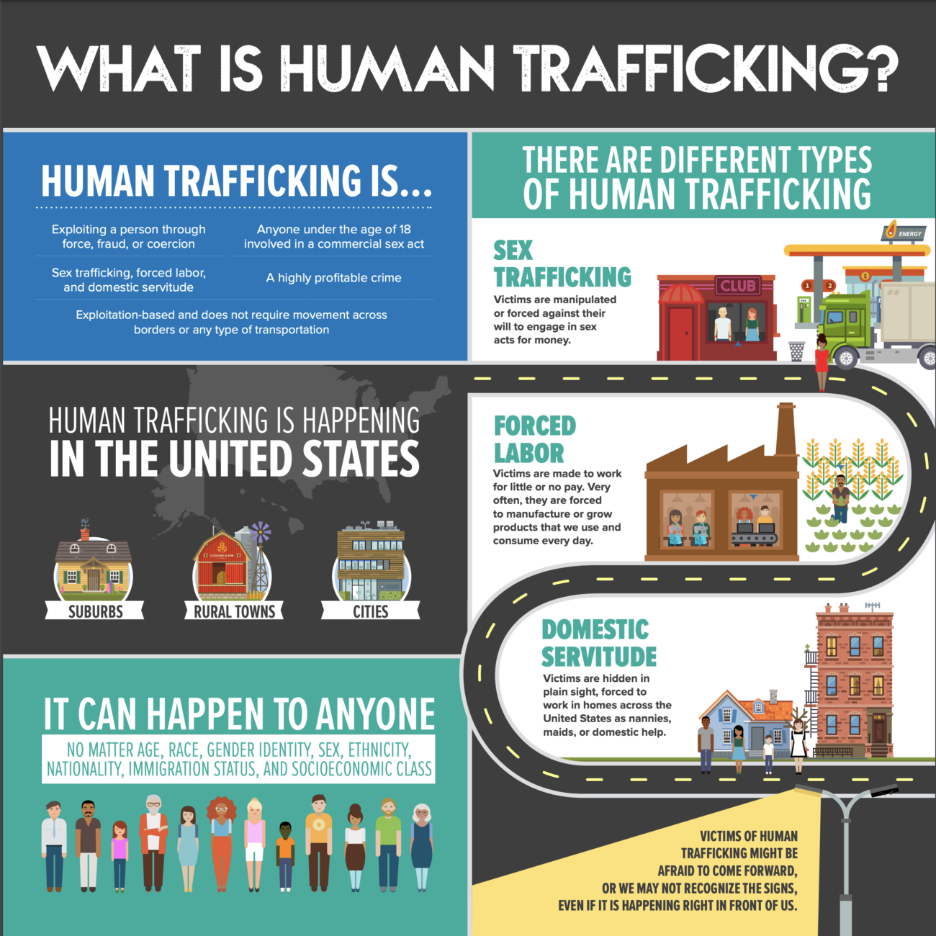
Traffickers will utilize force, fraud, or coercion to gain control of victims.
Examples: - Force – assault, rape/sexual assault, burning, strangulation, use of narcotics, etc.
- Fraud – withholding wages, false promises, fake romantic relationships, etc.
- Coercion – deportation threats, threats of serious harm, confiscation of identification documents, intimidation, humiliation (blackmail), control of daily life, etc.
Demographics: - Anyone can be a victim of human trafficking. The following descriptors do NOT increase or decrease the likelihood of risk: age, race, gender identity, sex, ethnicity, nationality, and immigration status. However, there are specific vulnerabilities that may increase a victim's likelihood of being targeted and recruited by traffickers.
Vulnerabilities: It is important to keep in mind the cycle of victimization, where victimization as a child increases likelihood of victimization as an adult. This cycle continues throughout a person's life.
Examples of common vulnerabilities:
- Psychological and/or emotional vulnerability
- History of physical/sexual/emotional abuse
- Economic hardship, poverty, or homelessness
- Dependency on drugs
- Lack of a social support system
- History of being a juvenile runaway or foster care
Online Recruitment
Mobile applications are utilized for recruitment due to the ease of access to victims, particularly minors, and their ability to remain anonymous.
- Messaging apps
- Gaming apps
- Social Media
- Dating apps/websites
Recruitment, promotion, and exploitation of victims most frequently occurs online. Victims may be unintentionally or unknowingly sharing personal information that highlights their vulnerabilities that the trafficker uses to gain trust and leverage against them. Victims are then often promoted and exploited on online platforms. Code words, emojis, fake profiles, and other various methods are used to disguise the illicit activity and evade detection by law enforcement.
|
Physical Indicators: - Absence of ID or travel documents
- Frequently at hotels
- Use of multiple phones
- Discreet or unexplained injuries, such as bruises in various stages of healing
- Living at their place of employment or with their employer
- Unfamiliar with the area or surroundings and/or names of acquaintances
- "Branding" tattoos – often intentionally placed in visible locations
Behavioral Indicators:
- Inability to freely contact friends or family
- Inability to speak for themselves
- Reclusive or isolated from a support system
- Runaway status
- Avoiding eye contact or acting fearful, timid, or submissive
- Inconsistent/contradictory narratives or rehearsed responses
- Constant supervision/surveillance (real or perceived)
- Resistance to contacting or communicating with law enforcement
|